The length of time you have before retirement — your investment “time horizon’’ — is an important consideration when determining your asset allocation strategy, or the mix of stocks, bonds and money market/stable value investments you select.
All of these investment vehicles are available in your Costco 401(k) retirement plan from T. Rowe Price, whether you choose to create your own portfolio or select a pre-assembled portfolio, such as a target date fund or asset allocation fund.
Your goals, financial circumstances and risk tolerance level may change as you go from entering the workforce to retirement and beyond.
Finding a balance, decade by decade
Your 20s and 30s: Now’s the time to start saving and investing through your workplace retirement plan. And the sooner you enroll and start saving, the better. Here’s why: When you invest through the plan, any earnings are put right back into your account. The longer your money stays invested, the more it can potentially earn through compounding.
Because retirement is several decades away, consider a higher allocation to stocks. Your investments should have time to ride out any ups and downs in the market.
Your 40s: Even if you’re just getting started, you still have 20 to 25 years to build up your savings. So make the most of these years.
Historically, stocks provide better long-term growth potential when compared with bonds and money market/stable value investments.
Your 50s and over: As retirement approaches, you may want to consider cutting down on stock allocations, which are more vulnerable to ups and downs in the market.
Before passing up too much growth potential, though, remember inflation and the power it could have to erode your money. Consider keeping a portion of your portfolio in stocks to help stay ahead of inflation over the 20 to 30 years you may need your nest egg to last.
Don’t know your money market funds from your mutual funds? We’ve got you covered. Start your financial education with this handy glossary of investment terms. (Pro tip: Bookmark this page so you can refer back to it later!)
These are also known as fixed-income securities, because the income they pay is fixed when the bond is sold. Bonds and bond funds invest in corporate or government debt obligations.
Commodities
These are physical commodities, such as an agricultural product (grains) or a natural resource (gold). A futures contract is an agreement to purchase or sell a commodity for delivery in the future.
Index funds
These funds invest in a particular stock market index, such as the S&P 500 or the Russell 2000. An index fund is managed passively and mirrors the performance of the designated stock or bond index.
Market-linked certificates of deposit (or structured CDs)
Returns are linked to the future performance of a market index, and may include stocks, bonds, foreign currency or other assets. These are designed for a long-term commitment (up to 20 years).
Money market funds
These are mutual funds that invest in short-term bonds. They usually pay better interest rates than a savings account but not as much as a certificate of deposit (CD).
Mutual funds
These invest in a variety of securities, which may include stocks, bonds, and money market securities. Costs and objectives vary.
Roth IRA
This is a personal savings plan for retirement where earnings that remain in the account are not taxed. Investments may include a variety of securities. Contributions are not tax deductible.
Stocks
Stocks represent a share of a company. As the company’s value rises or falls, so does the value of the stock. All Costco employees are eligible for the employee stock purchase plan, which allows you to purchase Costco stock through payroll deductions and eliminates brokerage fees through our partner, UBS Financial Services Inc.
Our mental health has a significant impact on our physical health. Chronic stress can be especially hard on our bodies and can lead to substantial health issues.
If you are someone who experiences stress frequently, you could be at risk for:
Heart disease
Daily stress can lead to heart attacks. Those with Type A personalities have an extremely high risk of developing abnormal heart rhythms. And even the normal stress of everyday life can negatively affect people already prone to heart disease.
Stroke
People who are highly stressed, or even moderately stressed on a regular basis, have a significantly increased risk of having a fatal stroke.
High blood pressure
Stress hormones cause an immediate rise in blood pressure. While this may not create problems for everyone, chronic stress and hypertension is a deadly combination.
Lowered immunity
Stress hormones compromise a body’s immune system, making it more susceptible to the flu, colds and other infectious diseases.
Here’s the good news
There are steps you can take to decrease your stress and improve your heart health. Take control of your stress — and calm your body and mind — through:
Breathing techniques: Breathing slowly and deeply automatically relaxes the body.
Yoga: Slower exercises, such as yoga, help connect breath, movement and body control.
Meditation: Find a quiet place to be alone, wherever you are, and try to clear your mind. Get started with our guided meditation.
Stretching: Take time to stretch whenever you find yourself in a tense position.
Walking: Walk around the building instead of taking a coffee break. Or get up 15 minutes early and walk around the block before you leave for work.
Sleeping: Make sure you get just a little more sleep than you think you need during times of high stress. If you need help falling asleep, try taking non-habit-forming sleep aids like melatonin, unwinding with apps like Calm and Headspace, or listening to relaxing audiobooks. Download Costco’s free audiobook app for discounts on some of your favorite reads.
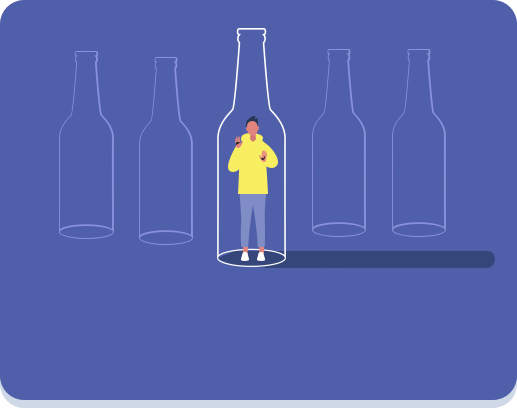
When it comes to alcohol, how much is too much? Short answer: It’s different for everyone, and it’s based on gender, age, weight and what’s right for you. What we do know is that over consuming alcohol can lead to health risks like heart disease, cancer, a weakened immune system and mental health concerns. In fact, excessive drinking is responsible for 1 in 10 deaths among adults ages 20–64 years.¹
If you’re concerned you might be indulging a little too much, or you’re worried about the drinking habits of a loved one, check out these videos from experts on alcohol and substance misuse to learn more.
One of my earliest memories is of trying to wake up one of my relatives and not being able to. And I was just a little kid, so I didn’t really understand why, but as I got older, I realized we had drug addiction in my family, including later cocaine addiction.
I’d been thinking about it a lot lately, partly because it’s now exactly 100 years since drugs were first banned in the United States and Britain, and we then imposed that on the rest of the world. It’s a century since we made this really fateful decision to take addicts and punish them and make them suffer, because we believed that would deter them; it would give them an incentive to stop.
And a few years ago, I was looking at some of the addicts in my life who I love, and trying to figure out if there was some way to help them. And I realized there were loads of incredibly basic questions I just didn’t know the answer to, like, what really causes addiction? Why do we carry on with this approach that doesn’t seem to be working, and is there a better way out there that we could try instead?
So I read loads of stuff about it, and I couldn’t really find the answers I was looking for, so I thought, okay, I’ll go and sit with different people around the world who lived this and studied this and talk to them and see if I could learn from them. And I didn’t realize I would end up going over 30,000 miles at the start, but I ended up going and meeting loads of different people, from a transgender crack dealer in Brownsville, Brooklyn, to a scientist who spends a lot of time feeding hallucinogens to mongooses to see if they like them – it turns out they do, but only in very specific circumstances – to the only country that’s ever decriminalized all drugs, from cannabis to crack, Portugal. And the thing I realized that really blew my mind is, almost everything we think we know about addiction is wrong, and if we start to absorb the new evidence about addiction, I think we’re going to have to change a lot more than our drug policies.
But let’s start with what we think we know, what I thought I knew. Let’s think about this middle row here. Imagine all of you, for 20 days now, went off and used heroin three times a day. Some of you look a little more enthusiastic than others at this prospect. (Laughter) Don’t worry, it’s just a thought experiment. Imagine you did that, right? What would happen? Now, we have a story about what would happen that we’ve been told for a century. We think, because there are chemical hooks in heroin, as you took it for a while, your body would become dependent on those hooks, you’d start to physically need them, and at the end of those 20 days, you’d all be heroin addicts. Right? That’s what I thought.
First thing that alerted me to the fact that something’s not right with this story is when it was explained to me. If I step out of this TED Talk today and I get hit by a car and I break my hip, I’ll be taken to hospital and I’ll be given loads of diamorphine. Diamorphine is heroin. It’s actually much better heroin than you’re going to buy on the streets, because the stuff you buy from a drug dealer is contaminated. Actually, very little of it is heroin, whereas the stuff you get from the doctor is medically pure. And you’ll be given it for quite a long period of time. There are loads of people in this room, you may not realize it, you’ve taken quite a lot of heroin. And anyone who is watching this anywhere in the world, this is happening. And if what we believe about addiction is right – those people are exposed to all those chemical hooks – What should happen? They should become addicts. This has been studied really carefully. It doesn’t happen; you will have noticed if your grandmother had a hip replacement, she didn’t come out as a junkie. (Laughter)
And when I learned this, it seemed so weird to me, so contrary to everything I’d been told, everything I thought I knew, I just thought it couldn’t be right, until I met a man called Bruce Alexander. He’s a professor of psychology in Vancouver who carried out an incredible experiment I think really helps us to understand this issue. Professor Alexander explained to me, the idea of addiction we’ve all got in our heads, that story, comes partly from a series of experiments that were done earlier in the 20th century. They’re really simple. You can do them tonight at home if you feel a little sadistic. You get a rat and you put it in a cage, and you give it two water bottles: One is just water, and the other is water laced with either heroin or cocaine. If you do that, the rat will almost always prefer the drug water and almost always kill itself quite quickly. So, there you go, right? That’s how we think it works. In the ’70s, Professor Alexander comes along and he looks at this experiment and he noticed something. He said ah, we’re putting the rat in an empty cage. It’s got nothing to do except use these drugs. Let’s try something different. So, Professor Alexander built a cage that he called “Rat Park,” which is basically heaven for rats. They’ve got loads of cheese, they’ve got loads of colored balls, they’ve got loads of tunnels. Crucially, they’ve got loads of friends. They can have loads of sex. And they’ve got both the water bottles, the normal water and the drugged water. But here’s the fascinating thing: In Rat Park, they don’t like the drug water. They almost never use it. None of them ever use it compulsively. None of them ever overdose. You go from almost 100 percent overdose when they’re isolated to zero percent overdose when they have happy and connected lives.
Now, when he first saw this, Professor Alexander thought, maybe this is just a thing about rats, they’re quite different to us. Maybe not as different as we’d like, but you know – But fortunately, there was a human experiment into the exact same principle happening at the exact same time. It was called the Vietnam War. In Vietnam, 20 percent of all American troops were using loads of heroin, and if you look at the news reports from the time, they were really worried, because they thought, my God, we’re going to have hundreds of thousands of junkies on the streets of the United States when the war ends; it made total sense. Now, those soldiers who were using loads of heroin were followed home. The Archives of General Psychiatry did a really detailed study, and what happened to them? It turns out they didn’t go to rehab. They didn’t go into withdrawal. Ninety-five percent of them just stopped. Now, if you believe the story about chemical hooks, that makes absolutely no sense, but Professor Alexander began to think there might be a different story about addiction. He said, what if addiction isn’t about your chemical hooks? What if addiction is about your cage? What if addiction is an adaptation to your environment?
Looking at this, there was another professor called Peter Cohen in the Netherlands who said, maybe we shouldn’t even call it addiction. Maybe we should call it bonding. Human beings have a natural and innate need to bond, and when we’re happy and healthy, we’ll bond and connect with each other, but if you can’t do that, because you’re traumatized or isolated or beaten down by life, you will bond with something that will give you some sense of relief. Now, that might be gambling, that might be pornography, that might be cocaine, that might be cannabis, but you will bond and connect with something because that’s our nature. That’s what we want as human beings.
And at first, I found this quite a difficult thing to get my head around, but one way that helped me to think about it is, I can see, I’ve got over by my seat a bottle of water, right? I’m looking at lots of you, and lots of you have bottles of water with you. Forget the drugs. Forget the drug war. Totally legally, all of those bottles of water could be bottles of vodka, right? We could all be getting drunk — I might after this — (Laughter) – but we’re not. Now, because you’ve been able to afford the approximately gazillion pounds that it costs to get into a TED Talk, I’m guessing you guys could afford to be drinking vodka for the next six months. You wouldn’t end up homeless. You’re not going to do that, and the reason you’re not going to do that is not because anyone’s stopping you. It’s because you’ve got bonds and connections that you want to be present for. You’ve got work you love. You’ve got people you love. You’ve got healthy relationships. And a core part of addiction, I came to think, and I believe the evidence suggests, is about not being able to bear to be present in your life.
Now, this has really significant implications. The most obvious implications are for the War on Drugs. In Arizona, I went out with a group of women who were made to wear t-shirts saying, “I was a drug addict,” and go out on chain gangs and dig graves while members of the public jeer at them, and when those women get out of prison, they’re going to have criminal records that mean they’ll never work in the legal economy again. Now, that’s a very extreme example, obviously, in the case of the chain gang, but actually almost everywhere in the world we treat addicts to some degree like that. We punish them. We shame them. We give them criminal records. We put barriers between them reconnecting. There was a doctor in Canada, Dr. Gabor Maté, an amazing man, who said to me, if you wanted to design a system that would make addiction worse, you would design that system.
Now, there’s a place that decided to do the exact opposite, and I went there to see how it worked. In the year 2000, Portugal had one of the worst drug problems in Europe. One percent of the population was addicted to heroin, which is kind of mind-blowing, and every year, they tried the American way more and more. They punished people and stigmatized them and shamed them more, and every year, the problem got worse. And one day, the Prime Minister and the leader of the opposition got together, and basically said, look, we can’t go on with a country where we’re having ever more people becoming heroin addicts. Let’s set up a panel of scientists and doctors to figure out what would genuinely solve the problem. And they set up a panel led by an amazing man called Dr. João Goulão, to look at all this new evidence, and they came back and they said, ”Decriminalize all drugs from cannabis to crack, but” – and this is the crucial next step – ”take all the money we used to spend on cutting addicts off, on disconnecting them, and spend it instead on reconnecting them with society.” And that’s not really what we think of as drug treatment in the United States and Britain. So, they do residential rehab, they do psychological therapy, that does have some value. But the biggest thing they did was the complete opposite of what we do: a massive program of job creation for addicts, and microloans for addicts to set up small businesses. So, say you used to be a mechanic. When you’re ready, they’ll go to a garage, and they’ll say, if you employ this guy for a year, we’ll pay half his wages. The goal was to make sure that every addict in Portugal had something to get out of bed for in the morning. And when I went and met the addicts in Portugal, what they said is, as they rediscovered purpose, they rediscovered bonds and relationships with the wider society.
It’ll be 15 years this year since that experiment began, and the results are in: injecting drug use is down in Portugal, according to the British Journal of Criminology, by 50 percent, five-zero percent. Overdose is massively down; HIV is massively down among addicts. Addiction in every study is significantly down. One of the ways you know it’s worked so well is that almost nobody in Portugal wants to go back to the old system.
Now, that’s the political implications. I actually think there’s a layer of implications to all this research below that. We live in a culture where people feel really increasingly vulnerable to all sorts of addictions, whether it’s to their smartphones or to shopping or to eating. Before these talks began — you guys know this – we were told we weren’t allowed to have our smartphones on, and I have to say, a lot of you looked an awful lot like addicts who were told their dealer was going to be unavailable for the next couple of hours. (Laughter) A lot of us feel like that, and it might sound weird to say, I’ve been talking about how disconnection is a major driver of addiction and weird to say it’s growing, because you think we’re the most connected society that’s ever been, surely. But I increasingly began to think that the connections we have or think we have, are like a kind of parody of human connection. If you have a crisis in your life, you’ll notice something. It won’t be your Twitter followers who come to sit with you. It won’t be your Facebook friends who help you turn it round. It’ll be your flesh and blood friends who you have deep and nuanced and textured, face-to-face relationships with, and there’s a study I learned about from Bill McKibben, the environmental writer, that I think tells us a lot about this. It looked at the number of close friends the average American believes they can call on in a crisis. That number has been declining steadily since the 1950s. The amount of floor space an individual has in their home has been steadily increasing, and I think that’s like a metaphor for the choice we’ve made as a culture. We’ve traded floorspace for friends, we’ve traded stuff for connections, and the result is we are one of the loneliest societies there has ever been. And Bruce Alexander, the guy who did the Rat Park experiment, says, we talk all the time in addiction about individual recovery, and it’s right to talk about that, but we need to talk much more about social recovery. Something’s gone wrong with us, not just with individuals but as a group, and we’ve created a society where, for a lot of us, life looks a whole lot more like that isolated cage and a whole lot less like Rat Park.
If I’m honest, this isn’t why I went into it. I didn’t go in to the discover the political stuff, the social stuff. I wanted to know how to help the people I love. And when I came back from this long journey and I’d learned all this, I looked at the addicts in my life, and if you’re really candid, it’s hard loving an addict, and there’s going to be lots of people who know in this room. You are angry a lot of the time, and I think one of the reasons why this debate is so charged is because it runs through the heart of each of us, right? Everyone has a bit of them that looks at an addict and thinks, I wish someone would just stop you. And the kind of scripts we’re told for how to deal with the addicts in our lives is typified by, I think, the reality show “Intervention,” if you guys have ever seen it. I think everything in our lives is defined by reality TV, but that’s another TED Talk. If you’ve ever seen the show “Intervention,” it’s a pretty simple premise. Get an addict, all the people in their life, gather them together, confront them with what they’re doing, and they say, if you don’t shape up, we’re going to cut you off. So, what they do is they take the connection to the addict, and they threaten it, they make it contingent on the addict behaving the way they want. And I began to think, I began to see why that approach doesn’t work, and I began to think that’s almost like the importing of the logic of the Drug War into our private lives.
So, I was thinking, how could I be Portuguese? And what I’ve tried to do now, and I can’t tell you I do it consistently and I can’t tell you it’s easy, is to say to the addicts in my life that I want to deepen the connection with them, to say to them, I love you whether you’re using or you’re not. I love you, whatever state you’re in, and if you need me, I’ll come and sit with you because I love you and I don’t want you to be alone or to feel alone.
And I think the core of that message – you’re not alone, we love you – has to be at every level of how we respond to addicts, socially, politically and individually. For 100 years now, we’ve been singing war songs about addicts. I think all along we should have been singing love songs to them, because the opposite of addiction is not sobriety. The opposite of addiction is connection.
Thank you.
Everything you think you know about addiction is wrong
New York Times bestselling author Johann Hari examines how our society responds to addiction ― and what we could all be doing better to support those who need it most. The short answer? Let them know they’re not alone.
+
Show transcript
I’ve been in the entertainment industry for over 30 years. I was a very light drinker in my 20s. In my 30s, I was a social drinker, and somewhere in my early 40s, I developed alcohol use disorder, which is abbreviated AUD.
We don’t really use the term alcoholism that much anymore, because it’s too narrow of a term. AUD covers everything from the occasional binge drinker to the chronic daily drinker. I started to realize that something was very wrong with me when I was always the last person standing at the bar or at dinner parties when everybody else had switched to coffee, I was still quaffing wine. Yeah.
I realized then that I definitely had a problem, so I decided that I would just go cold turkey, sober, and I did. But what I didn’t realize is that could cause what’s called the alcohol deprivation effect, where once the honeymoon period of sobriety wears off, you’re left with constant physical cravings for alcohol. Think about it. You drive by a liquor store, and you’re triggered, you want a drink. You walk by a pub, and you get angry because you can’t go in there and have just one drink. You start isolating from your friends and families because they drink.
Developing AUD was an incredibly confusing thing for somebody who, admittedly, likes to be in control. I was definitely not in control of this at all. In fact, I was swept up in a nearly decade long battle with something I refer to as “the monster.” Addiction is a monster, and it affects every ethnicity, social class, race, sex, age; it doesn’t matter. You can be the most disciplined person in the world … when it gets you, it has you. “It” is in control. When I finally realized that I was not in the driver’s seat, that the monster was, I sought out every single treatment I could possibly find or afford.
I went to rehab for $30,000 to basically drink wheat grass and do tai chi. I went to talk therapy for over two-and-a-half years for 200 bucks a session. I actually sought out a hypnotherapist who claimed that he had cured a member of the Grateful Dead – that was 400 bucks an hour. I went to 12 different meetings of AA in two different countries. I went macrobiotic. I got my chakras realigned. I tried veganism. You name it, I tried it, and I – I prayed. I prayed until my knees were black and blue, and I still kept relapsing, time and time again. I mean, I think that in the years that I was suffering from AUD and really battling it, I probably relapsed close to 20 times. And each relapse became more difficult to recover from, and they got worse and worse and worse.
And here’s the thing: I wasn’t drinking because I had a crummy childhood, or because I was suffering from any personal trauma. I mean, if you look at it from the outside, I had a great life! I was in my chosen career. I had a beautiful home. I had friends and family who loved me and supported me. I was drinking because I was physically addicted to alcohol. That’s it. Once I started, I could not stop drinking. I have addiction on both sides of my family, and the genetic predisposition coupled with engaging in the behavior, which for me is drinking, made me an addict.
I knew one thing for sure after trying all of these treatments, and this became very clear: doing equine therapy or tai chi in some swanky beachfront expensive rehabilitation facility was not going to fix my biological addiction. By the end of 2008, I had six months of sobriety under my belt, and that’s when the addict started to talk to me in my head.
That’s the insidious thing about addiction, is once you have a bit of sobriety under your belt, you go, “Hey, I’m not an addict.” It whispers to you, “Go ahead, have a drink. You’ll be able to control it. Just one drink.” So I listened to that idiot in my head, and I went out to dinner that night, and I had a glass of wine, came home, and I was so chuffed, “Well, look, the idiot is right. I’m not an addict. I only had one glass.” Right …
Day 2, I had two glasses; day 3, I had three glasses – plus I picked up a bottle to bring home and drink on the way home. Day 5, I was in a full-blown binge; I was drinking anything and everything, I would have probably drunk vanilla extract if I had it. When I was finally too ill to drink one more drop of alcohol, I did what I always did: went cold turkey and tried to detox. This time, something went very wrong. I started to suffer from seizures in my body. I lost all control of my motor controls. I couldn’t stand up; I couldn’t get dressed.
So I called a friend, and she took me to my one and only medical detox. Where, I got to tell you, I was not treated very well. In fact – until they had my $3,000 – they finally gave me my medication that I needed to stop shaking. At that point, I felt so humiliated and so down and so embarrassed by the whole experience that I checked myself out and I left. On the way out, there was this little stack of flyers for all these different various treatments for AUD. One of them was for a shot, and this shot promised to eliminate all cravings for alcohol. The shot was over $1,000 a month, but at this point, I would have sold my soul to get better. When I got home, I Googled that shot. It turns out that the main ingredient in it is Naltrexone, an FDA approved, non-addictive, safe medication that’s been used to treat AUD since 1994.
As I was searching, a book popped up: the rather boldly named The Cure for Alcoholism, by Dr. Roy Eskapa. And there was this little sample chapter, so I read the chapter, and I was absolutely hooked. This made complete sense to the science lover in my head. It described a treatment called The Sinclair Method, or TSM, where one takes an opiate blocker, you wait for an hour so the medication can get into your bloodstream and brain, and then you drink alcohol.
Sounds counterintuitive, I know, but hear me out. Usually when an addict drinks, they get a huge reward from alcohol, and that’s what makes them want more and more and more. But if you drink an opiate blocker, like Naltrexone, or Nalmefene if you’re here in the UK, instead of the alcohol reinforcing the addictive synapses in the brain, the opiate blocker blocks the endorphins from activating the part of the brain responsible for addiction. It’s as if you have a huge room of endorphins living in your brain? And every time you drink alcohol, those endorphins rush through the door, and they raise hell in your brain and your neuro pathways. The opiate blocker stops those endorphins from even leaving the room. It slams that door, and it locks it, so they can’t even get out and play.
Over the course of a couple days, or weeks for some people, the body is slowly detoxed, drinking levels dramatically decrease because your cravings for alcohol subside. I didn’t have a doctor that would prescribe me Naltrexone back then; in fact, when I mentioned it to anybody, they said, “What?” So I ordered my pills from an Indian pharmacy online, 50 mg of hope. Took a couple of weeks for the pills to come to me, and when they did, I got to tell you I was scared out of my mind because I thought, “What if it doesn’t work? What if it makes me relapse again? What if it’s a worse relapse than the last one?” But at this point, I was so desperate – I took my chance.
So I took the pill; I waited the hour; I poured myself a glass of wine, and it was a miracle. I mean, the wine just sat there while I ate my dinner. There was no head games, no compulsion, no “I want more, more, more” – nothing. I took a couple of sips, and I went, “Meh. I’m done.” It was a complete miracle. Three months into TSM, I had my true aha moment. There was this billboard – I hate this billboard – near where I lived in Los Angeles, and every time I drove by it, it had a huge glass of red wine on it, which was my particular poison, massive glass of red wine, every time I drove by that billboard, it would trigger me. If I was in drink mode, it would trigger me, I’d go, “I want more.” If I was in sober mode, I would drive by that billboard, and I’d go, “Uh, damn it, I can’t have a glass of wine.” This particular day, I drove by that billboard, and my brain said to me, “That’s just a billboard.” I can’t even explain to you what a profound moment this was, because it meant that my thought processes were normal again. It meant that my brain was fixed. It meant that I was me again.
Six months into TSM I was mostly sober, except for the occasional planned drink one hour after taking Naltrexone. TSM worked so well for me that I decided to contact Dr. Roy Eskapa and thank him for writing his book. I also asked him to thank American researcher Dr. David Sinclair, whose life’s work, quite literally, saved my life. I asked him, “What can I do to help spread the word about this treatment?” He said, “Well, why don’t you write a book?” So I did. That’s when my journey of discovery really began. I found out that the World Health Organization estimates that a person dies – 3.3 million people die every single year from alcohol-related causes. That’s more than malaria, tuberculosis, AIDS. I also found out that multiple researchers estimate that 80 – 90% of people suffering from AUD do not seek treatment, and many of these people don’t seek treatment because they’ve been falsely led to believe that they have to give up alcohol for the rest of their lives, which to a 20- or 30-year-old can be utterly daunting, not to mention kind of unrealistic. I also found out that of the 10% who do seek treatment, up to 90% of those people are relapsing within the first four years! I mean, what other treatable disease can you think of that has this abysmal of a success rate?
Studies show that tough love and humiliating an addict, or making them hit rock bottom is not helping them; it’s actually making people worse. As Dr. Keith Humphreys from Stanford University said, “It’s remarkable that people believe what’s needed is more punishment. If punishment worked, there wouldn’t be any addiction. It’s a punishing enough experience.” He is absolutely right. It is punishing. If we addicts had a normal disease, we would be treated with sympathy and comfort; instead, we’re faced with a barrage of “Why can’t you just quit? Just say no,” and a complete lack of understanding or compassion. Many people suffer for much longer than I did, but the majority of us suffer for about a decade before finding help. So, why do so many people believe that a long-term battle with alcohol addiction can be simply stopped in 30 days or less with nothing but talk therapy and willpower? It’s amazing. It’s amazing.
The World Health Institute estimates that a person dies every ten seconds from alcohol use disorder. Is our current treatment system really the best we can do? The Sinclair Method has a 78% long-term success rate. Imagine a world with 78% less alcohol addicted people. Imagine the profound impact that would have on our society. 78% less broken families. 78% less abused children, lost days of work, insurance costs, accidents, and on and on and on. The Sinclair Method uses science to empower your friends, your family, or even yourself to achieve recovery. Thanks to the Sinclair Method, I was able to Ctrl-Alt-Del my addiction to alcohol. I am no longer powerless. The monster is no longer in control.
I am. TSM works wonders for alcohol-addicted people. It is my dream to see it become a go-to, regularly offered treatment for those in need. I encourage all of you, I beg you to please help spread the word of this lifesaving treatment. And let’s give addicts the option they deserve. Thank you very much.
How I overcame alcoholism
Actress Claudia Christian shares her journey from social drinker to someone who struggles with alcohol use disorder. Here, she speaks about her decade-long journey to recovery, and the treatment that finally saved her life.
+
Show transcript
So I still remember the exact spot on the highway where I was driving. I think I remember it so vividly because I was having one of the most important conversations that I’ve ever had with myself. In that moment in my car,
I knew in my bones, I wouldn’t drink alcohol again. So you might be thinking what was the rock bottom that brought me to that point? And the answer is … there wasn’t one! You see, I was a gray area drinker and I drank between two extremes. I wasn’t an end stage, lose everything kind of drinker, not by a long shot. If you would have asked my friends and family if they thought I had a drinking problem they would have said, “of course not”. But I also wasn’t an every now and again drinker who would have a glass of champagne for example at the wedding and then not drink again for weeks. I didn’t fall into either one of those drinking categories or drinking extremes. And … maybe you can identify? As a nutritionist who has worked in corporate wellness since 2004, I functioned really well. I knew how to eat well, I worked out on a regular basis and I loved to read and study everything health and wellness. But what people didn’t know was how much I loved the “off” switch that wine provided to my “on” and often anxious brain. I loved the immediate effect that red wine delivered. And people also didn’t see how easy and frequent it was for one glass of wine to turn into one bottle of wine. There is a commune characteristic and pattern in gray area drinking that I experience and I’ve watched many others experience as well and that’s a stopping and restarting drinking. One time I stopped for 7 months, another time I stopped for 30 days, and other short periods in between, and then I would think to myself: “Why am I being so restrictive? I can be a social drinker”. So I’d return to drinking only to return to a level of drinking where I regret it. This back and forth drinking marry-go-around was the exact thing that I knew I wanted to exit off for good that day in my car on the highway. And maybe you actually don’t identify with gray area drinking because not everyone will. But here is what I know with absolute certainty: there are people in your life right now, it could be family members, close friends, colleagues, and they are worrying and wondering as they’re rethinking their drinking because they are in the gray area,
but more than likely they are not talking to you about it and they are not talking to others about it because they think they are the only ones and they think they are alone. So how do I know this? I’ve lived this for many years. the more I’ve been speaking out professionally about my gray area drinking experience the more my email inbox gets flooded with emails from attorneys and therapists, senior level managers and nurses, stay in home moms, yoga instructors, and many many others. And the words are different, but the jest of what they write me is all the same and they say, “I identify with your drinking story. I don’t have a rock bottom either, I want to be able to drink socially, but I end up regretting how much I drink on a frequent basis.” This gray area drinking spectrum is real and it’s large. And a lot of high achieving, high functioning people who silently live here every day. But beyond gray area drinking is even something bigger and that’s a collective story of anxiety. And this I believe is where we are collectively missing the mark. We don’t need anymore cognitive hoops to jump through and we don’t need anymore ways to focus our will power and contort our will power in an attempt to “fix” ourselves, what we need is practical training in how to nourish our nervous system in a revolutionary and new way. So there is many components and pieces to this, but one component and one interesting place to start can be understanding your neurotransmitters. So let’s start with GABA. So GABA is the natural anti-anxiety neurotransmitter. When GABA is low we can feel anxious and our mind can get stuck in a loop of worry, rumination or obsession about anything. Serotonin is the natural anti-depressant neurotransmitter. When serotonin is low we can feel more depressed, unhappy, and crave things like carbs and alcohol and have trouble sleeping. Dopamine is the neurotransmitter that’s in charge of our focus and motivation. When dopamine’s low it can be hard to stay at a coarse and stay on track with your goals and your routines. So people with low GABA people will often say that they drink as a way to relax. That was me. People with low serotonin will say they drink as a way to have fun, and people with low dopamine will say they drink as a way to connect and engage with others. But here’s the problem and here is what I want to you know and take from this talk — It can be relatively easy for most people on the gray area drinking spectrum to stop drinking, but it can be hard to stay stopped, especially if we are not replenishing our neurotransmitters and nourishing our nervous system in a comprehensive and consistent way. So here’s the good news, it turns out that there is actually specific foods, movements and lifestyle practices that while they are great wellness tips for everyone, they have very direct and immediate roles in boosting all of our neurotransmitters. So as a way to give you some practical ways that you can begin to boost your neurotransmitters now I’d like to start by doing that by using the acronym “NOURISH”. So N – notice nature. Research shows that when our pleasure, which is dopamine, and our happiness, which is serotonin, both begin to rise when we go into areas with a large density of trees or a large body of water like an ocean. All it takes is 20 minutes of being around nature with a lot of trees, a lot of water for your GABA, serotonin, and dopamine to begin to rise. O – observe your breath. There are many medications that can stunt, blunt, and block the fight-flight-freeze response in your body, there are no medications that can boost the calm response. But there is one mechanism in your body that can do that naturally. And that mechanism is your breath. When our breath is regulated our neurotransmitters become regulated. Take a breath! How does that feel? You all just gave a little boost to your GABA, serotonin, and dopamine. U – uniting with others. The research is solid: close social bonds, community, and social connections have a direct impact on our nervous system. In our technology driven world we have become very deficient of human touch. Hug the people who support you, hug your pets, get body work, massage or Reiki, it doesn’t matter, whatever resonates with you. Physical touch has an immediate impact on boosting GABA, serotonin and dopamine. R – replenish with food. When you eat protein, whether it’s animal protein or vegetable protein, it doesn’t matter, it breaks down into amino acids and amino acids are what replenish GABA, serotonin, and dopamine. When you eat healthy fats, particularly in the form of Omega 3 fats like fish oil, flax seeds, or walnuts, those Omega 3 fats are the raw materials that make your neurotransmitters. When you eat carbohydrates, specifically in the ideal form of vegetables, and even more specific, leafy green vegetables, they break down into B vitamins and B vitamins are the pre-cursors that make serotonin. When you replenish with food you replenish your neurotransmitters. I – initiate movement. Any exercise will boost the neurotransmitters. The Boston University did a study with yoga participants and they had them do a 60-minute yoga class. And then when they measured they’re GABA after that class they found everyone’s GABA went up at least 27%. Some participants had arising GABA up to 80%. Compared to a control group that read a book for 60 minutes, there was no change in their GABA. One 60-minute yoga class can initiate a boost in all your neurotransmitters. But after we active, we need to be still. S – sitting in stillness allows the nervous system the opportunity to respond and adopt in a complex world that we live and work in in a very nurusing way. And particularly sitting in stillness and silence, invoking a sacred prayer, meditation, or scripture can really feed and replenish your GABA, serotonin, and dopamine. H – harness your creativity. Dopamine loves the creative flow. And the way you get into a creative flow is to pick a single focused activity that ends en “ing”. Some examples are gardening, fishing, painting. But be careful because there are some other activities that end en “ing” that make us feel like we get a dopamine hit: drinking, smoking, overeating. Fishing, painting, the positive hobbies boost your dopamine. The other: drinking, smoking, overeating depletes dopamine. Harnish your creativity, but be very conscientious how you doing that. As of today, It has been 1054 days since I’ve had a drink of alcohol. But I didn’t have a rock bottom moment that brought me to this point and you don’t need to have one either. From the outside looking in my drinking didn’t look problematic, but from the inside looking out at the road I was traveling down I knew the way I was drinking was a problem for me. And I’m not the only one making this decision. There are thousands of people in this country, in the U.K., Australia, and Canada who are rethinking their drinking and stopping drinking because they choose to, not because they have to. A whole paradigm is shifting and we up on a whole new wellness movement starting to go alcohol free. But I’ll be honest there were two things I worried about when I stopped drinking. And the first was: what would happen with my relationships? This one surprised me. The important relationships in my life, family stuck by me, but they deepened. And I look back at all the new wonderful people who who had entered my life in the last 3 years, some of them drink, some of them don’t, but our relationship is not built on my personal decision to not drink. We’ve been able to connect and relate and we’re aligned in a way that is new for me. And it’s been really really nourishing to add these relationships to my life. The second thing I worried about was what if something awful happened and it would be so painful that I’ll want to numb it with a glass or a bottle of wine? That worry came true. Eighteen months into not drinking I hit my worse personal financial crisis in my life. If there was ever a time when I wanted to numb the experience and anesthetize the intense anxiety and fear that I felt that was the time. But I didn’t do it. And I believe the reason I got through that time without drinking wasn’t because I had an intellectual understanding of the nervous system, which I do, but intellectualizing something is what gets me through something. And it wasn’t because I had a strong will power, which I don’t, my will power fatigue is as much as the next person. But what I had was a very targeted and specific nourishment that I had given my nervous system leading up to that point in a very new and different way. And that had given me a zone of resilience and internal zone of resilience that I’ve never had before. So whatever road you’re on, wherever you are on that road with your own internal conversation, whether you’re a healthcare professional like myself, a business professional in any industry, a stay at home parent or anyone else, if you know in your bones that you’re in the gray area with drinking or anything else as an attempt to regulate the anxiety in your body or the discomfort in your life, don’t forget: your GABA, your serotonin, and your dopamine are waiting for you to activate them with certain foods, movements and lifestyle practices, and when you do that you’re giving your nervous system the nourishment it’s been craving all along. Thank you!
Gray area drinking
Nutritionist and wellness expert Jolene Park discusses the concept of ‘‘gray area drinkers” (the people who are between those who have alcohol occasionally and those at rock bottom), and how that can affect someone’s mental and physical health.
(P.S. Concerned about your own alcohol intake? Check out this free online screening.)
Whether you’re working on your recovery or you have a family member struggling with substance misuse, tune in to these podcasts for addiction resources and support.
The first season of this investigative podcast explores the opioid crisis through the lens of one person’s last day of life. Hosted by author Stephanie Wittels Wachs, who lost her brother in 2015 to a heroin overdose, Last Day breaks down how addiction impacts our country today ― and the ways we can move forward.
The Addicted Mind
Looking to understand more about addiction treatment from a licensed therapist? The Addicted Mindcovers the latest research on the subject, as well as how recovery differs from person to person.
My Child & Addiction
Think of this podcast as a support group for parents. Hosted by three fathers whose children are addicts, My Child & Addiction offers encouragement and support for families during the challenging journey of recovery.
Addiction Unlimited
Brought to you by a former addict turned recovery coach, Addiction Unlimited focuses on actionable steps to help you stay sober. Plus, you’ll hear from others about their real-world recovery experiences.
Until recently, the term “drug use” typically referred to illegal substances like cocaine, heroin or crystal meth. Today’s teens are more likely to get hooked on prescription medication, especially painkillers. Opioids are a class of highly effective pain relievers that includes oxycodone (brand names: OxyContin, Percocet), hydrocodone (brand name: Vicodin) and fentanyl. Teens most often receive opioid prescriptions after dental procedures ― like wisdom tooth removal ― and sports injuries.
But prescription opioids have downsides that make them prone to misuse. They can produce feelings of euphoria, like their chemical cousins heroin and morphine. And their effectiveness fades quickly. Within months, a patient can be taking dangerously high doses to feel the same relief.
If your child is prescribed opioids for pain relief after an injury or surgery, it’s important to be aware of the facts and to take an active role in their recovery. Here’s how you can help:
Talk frankly with your child’s doctor, dentist and pharmacist
No parent wants to see their child in pain. To ensure yours receives the proper aftercare, get the facts from your health care provider. Ask about the standard recovery time for your son’s or daughter’s procedure, how much medication is necessary, and when your teen should stop taking the pills.
Know the options for pain relief
Opioid painkillers are rarely necessary after wisdom tooth removal, according to Dave Thomas, PhD, a health scientist administrator at the National Institute on Drug Abuse. ‘‘NSAIDs work as well or better in those situations,” he says. The American Dental Association also recommends simple NSAIDs, such as ibuprofen, as the first line of pain therapy after dental procedures. (Exparel is a pain-management medication that’s an alternative to opiates. Through Costco’s Aetna Dental Plan, you can receive this medication at no cost to you. Talk to your dentist to see if it’s right for your teen’s procedure.)
Alternative pain-management techniques can boost the effectiveness of over-the-counter drugs, especially in young people. Options include ice packs, distraction (video games, TV), massage, mindfulness and even old-fashioned TLC.
Talk with your kids
Getting through to teens isn’t always easy. Pick a time when you’re both relaxed and focused. Go in with some talking points to anchor the conversation. For example:
Calmly explain the dangers. Many teens assume that drugs that are prescribed by a doctor and come from a pharmacy must be safe. But opioids pose special risks. The difference between the prescribed dose and an overdose can be very small. (Even with opioids prescribed by a trusted doctor, there’s always a risk of dependency.) Opioids also seriously impair your ability to drive. And it’s hard for doctors and patients to know when regular use switches to addiction ― until you try to quit. “That is when they realize they have a problem,” says Lynne Kain, an Aetna case manager who counsels young drug users. “They had never tried to stop before and thought it was just ‘recreational’ use up to that point.”
Urge them not to share medication. Dosage is highly individual: What’s safe for one person can be dangerous for another. And opioids can be deadly when mixed with other common medications, such as anti-anxiety and insomnia drugs.
Use your own words, not clichés. “I feel that catch phrases like ‘Just say no’ are outdated with the teen population of today,” says Kain. “Concrete facts and examples resonate more and show you are respecting their intelligence.”
The National Institute on Drug Abuse offers excellent guidance on how to have difficult conversations with your teen, including videos showing positive and negative approaches.
Maintain control of your child’s painkillers
Even responsible teens or those managing their medication for other conditions should not be allowed to control their painkillers. “Parents should closely supervise opioid use, keeping the bottle in their possession at all times and giving the medication only as needed,” says Harold Paz, MD, chief medical officer at Aetna®. Store pills in a safe place where they aren’t readily accessible, like a lock box or a lockable drawer.
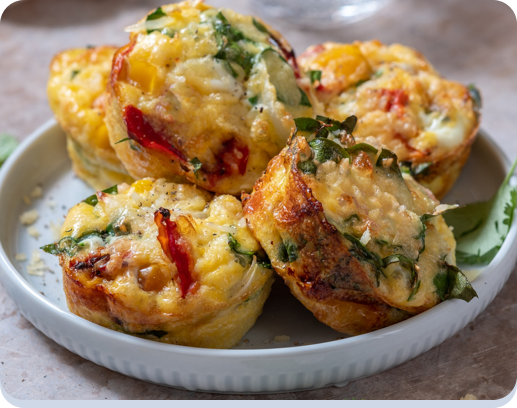
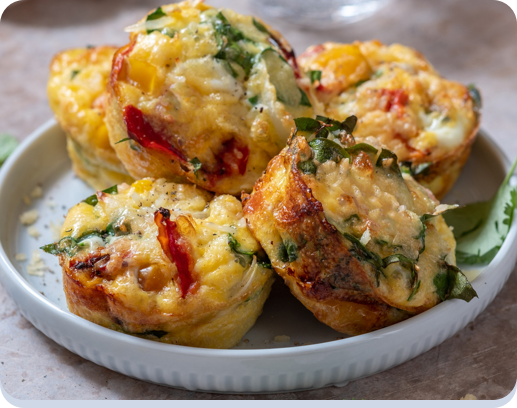
Add olive oil, then sauté onion for 4 minutes. Add garlic and sauté one additional minute.
Add mushrooms and cook for 5 minutes. Then add chicken sausage, and cook 6 minutes, or until thoroughly cooked. Break the sausage up into small pieces. Add sun-dried tomatoes and incorporate fully.
Add kale and cook about 2 minutes, until it wilts slightly.
Turn off heat then stir in feta
Spray 12-cup muffin pan, and then add ingredients evenly to each muffin cup.
Pour equal amount of egg into each muffin cup, filling to just below rim.
Bake until the eggs have set, about 25-30 minutes.
Recipe Notes: Can be stored in an airtight container in the fridge for up to 4 days. Also can be frozen. Wrap each egg cup individually in plastic wrap and then tin foil and freeze. To reheat, reheat in a toaster oven or microwave for about 30-45 seconds.
You may know that type 2 diabetes is when your blood sugar (blood glucose) is too high. But what’s prediabetes? This is when your blood sugar is higher than normal, which puts you at risk for type 2 diabetes. Keep in mind that prediabetes is still a serious condition that needs special attention.
According to the Centers for Disease Control and Prevention, more than 1 out of 3 adults in the United States have prediabetes. And yet, most of them don’t know they have it.¹
The good news is that there are things you can do to help prevent type 2 diabetes or delay its onset. These include making lifestyle changes to help you keep your blood sugar levels under control. You can get started by making these part of your daily life:
Managing your weight
Making healthy food choices
Staying physically active
Get your body up and moving
Regular exercise is one of the most important things you can do to help prevent type 2 diabetes or delay its onset. Here are some tips to get you started:
Talk with your doctor
You may need to have a medical exam before you start an exercise program.
Make it a priority
Do moderate to intense activity for at least 30 minutes a day, 5 times a week.
Be consistent
Don’t go more than two days without being active. Keep the habit going strong.
Get creative
Why not take the stairs? Or park your car farther away? Instead of sit-down meetings, have walking meetings. Stay active whenever you can.
Build it in
Pick part of your schedule and pin an activity to it. If you’re busy, you can exercise in 10-minute intervals. Every bit helps.
Know that everyone is different
What works for one person may not work for another. Just do what you need to do to help yourself succeed.
1Centers for Disease Control and Prevention. Prediabetes: your chance to prevent type 2 diabetes. May 30, 2019. Available at: cdc.gov/diabetes/basics/prediabetes.html. Accessed June 13, 2019.
No matter where you are in your life, everyone can benefit from estate planning. Often people think that estate planning is just for the wealthy, for those approaching retirement age, or for those who have children.
However, only about 50 percent of employees have designated a beneficiary (a person or entity who will receive those benefits in the event of your death).
That’s right! All full-time and part-time employees enrolled in a Costco medical plan, even those who declined coverage because they’re enrolled by another employee or health plan, have life insurance and an accidental death and dismemberment (AD&D) policy that’s paid for by Costco. However, only about 50 percent of employees have designated a beneficiary (a person or entity who will receive those benefits in the event of your death). Without a designated beneficiary, your life insurance may not go to the correct person — or your loved ones will have to take extra steps to access your life insurance. Therefore, it’s important for all employees to designate their life insurance and AD&D beneficiaries by logging onto the enrollment website located on Costcobenefits.com or calling the enrollment center at 800-541-6205. Employees can view and update beneficiary information at any time.
Don’t forget your retirement accounts
Most employees also have a 401(k) or 1165(e) account through Costco’s Retirement Plan. Just like life insurance and AD&D, it’s important for employees to designate a beneficiary for their Costco retirement account. (There are some special rules about designating a retirement account beneficiary when you’re married.)
To learn more about beneficiary and eligibility rules, view the Costco Retirement Plan Summary Plan Description located on Costcobenefits.com. To designate a beneficiary to your Costco Retirement Account, log on to TRowePrice.com or call 800-922-9945.
Learn about wills, trusts, and other estate planning
Designating a beneficiary takes care of your life insurance, AD&D, and retirement plan through Costco’s Benefit Program. But what about your other assets like your house, cars, collectibles, bank accounts, and other investments? And what happens if the unlikely event your death occurs before your children are adults, or you become unable to make financial or health care decisions for yourself?
Wills and trusts ensure that your assets and possessions end up where you want them to go. If you have children who are minors, you can also make a will to name who will be your child(ren)’s physical and financial guardian.
Durable power of attorney and health care directives give the person you choose the ability to make decisions for you regarding your health care, legal matters, and finances if you become incapacitated or unable to communicate your own wishes.