
Categories
Articles

Busting mental health myths

LEARN THE BASICS

Busting mental health myths

Can you tell the difference between a mental health myth and a fact? Read on to learn the truth about the most common misconceptions about mental health.

Print

Looking for more? Find other articles below

person reading a way-finding sign that points in directions to "myth" and "fact"

Myth: Mental health issues don’t affect me or anyone I know.

Fact: Mental health problems are actually very common and affect people from all walks of life. In 2020, about:

  • One in five American adults experienced a mental health issue
  • Anxiety disorders are the most common mental illness in the United States, affecting 40 million adults age 18 and older every year.*
  • One in six young people experienced a major depressive episode
  • One in 20 Americans lived with a serious mental illness, such as schizophrenia, bipolar disorder or major depression

Myth: Children don’t experience mental health problems.

Fact: Children of all ages, including teens, tweens and even very young children, may show early warning signs of mental health concerns. These problems can arise from a variety of causes and are often diagnosable. 

Myth: Personality weakness or character flaws cause mental health problems.

Fact: Mental health problems have nothing to do with being lazy or weak. Many factors contribute to mental health problems, including:

  • Biological factors, such as genes, physical illness, injury or brain chemistry
  • Life experiences, such as trauma or a history of abuse
  • Family history of mental health problems

Myth: Once you have mental health problems, you’ll always have them.

Fact: Studies show that people with mental health problems get better, and many recover completely. There are more treatments, services and community support systems than ever before, and they work.

Myth: Therapy and self-help are a waste of time.

Fact: According to the American Psychology Association, hundreds of studies have found that psychotherapy helps people make positive changes in their lives**. Treatment for mental health problems varies depending on the individual and could include medication, therapy or both. Many individuals can work with support during the healing and recovery process.

Myth: I can’t do anything for a person with a mental health problem.

Fact: In 2020, only 20% of adults received any mental health treatment in the previous year, which included 10% who received counseling or therapy from a professional. Friends and family can be important influences to help someone get the treatment and services they need by:

  • Reaching out and letting them know you’re available to help
  • Helping them access mental health services
  • Learning and sharing the facts about mental health, especially if you hear something that isn’t true
  • Refusing to define them by their diagnosis or using labels such as “crazy”; instead use respectful language

*Anxiety & Depression Association of America. Understanding anxiety & depression.
**American Psychological Association. Understanding psychotherapy and how it works.

Source: MentalHealth.gov. Mental health myths and facts.

If you or a member of your household is struggling with a mental health condition, the following resources can help. These resources are confidential and available to you at no extra cost.


 

Categories
Quote

I believe that through knowledge and discipline, financial peace is possible for all of us.

Dave Ramsey

Categories
link

Check out

Categories
Articles

6 financial tips for the sandwich generation

LEARN MORE

6 financial tips for the sandwich generation

It seems like only yesterday that your kids were toddlers. Now they’re heading to college — just as your aging parents need your help. Congratulations, you’ve joined the sandwich generation. Whether this is your current situation — or one you may face in the future — taking care of multiple generations of your family can be tough on your stress level and your wallet.

Print

Looking for more? Find other articles below

multi-generation family

Here are six tips to help you support your loved ones while safeguarding your own financial well-being.

1. Get your finances on track.

Whether you’re currently caring for your kids and aging parents, or you’re on your own, now’s the time to get rid of your debt. Need help? Sign up for SmartDollar® and follow the 7 Baby Steps to restore your financial health.

2. Talk about finances early and often.

If you’re caring for your parents, don’t be afraid to ask them tough questions. Are they in debt? Do they have life insurance or long-term care insurance? Do they understand their investments? Do they have a will?  Can they share its location with you? As for your grown children, ask them about their goals. Talk to them about lifestyle changes they need to make to get where they want to be.

3. Start planning for the right kind of elder care

If your parents need in-home care, an assisted living facility or a nursing home, you’ll need to discuss the financial impact with them. Decide what type of care fits their budget (or yours, if you’re the one supporting them). Visit Resources For Living® for adult and elder care referrals and to find out more about the 30-minute free legal consultations available to you.

4. Save and invest for your own retirement.

If you aren’t already doing it, start saving for retirement. By making your retirement savings a priority, you can save your kids from the same stress you might be going through now with your own parents. The sooner you take advantage of your Costco Retirement Plan, the more you’ll save.

5. Save for your children’s college.

It’s never too early to start exploring the best ways to save for your kid’s college education. If they’re still in high school, make sure their dream college is one you can afford. Help them look into scholarships, and encourage them to get a part-time job. This way, they can start saving before entering college. If you have kids who are already in college, talk to them about getting a part-time job during the school year and a full-time job for the summer to help them avoid accruing debt. Finally, talk with them about learning to live on a budget.

6. Set clear boundaries.

Balancing money and relationships can be complicated. The best thing to do is set healthy boundaries and talk about expectations. It’s hard to say no to parents or children when you’re trying to work on your finances. But don’t let anyone make you feel guilty for trying to take care of your own household first.

Source: RamseySolutions.com

The following resources are available to help you stay financially fit — whether you’re single or caring for aging parents or children. These resources are confidential and available to you at no extra cost.


Categories
Articles

Make a will for peace of mind

EXPLORE MORE

Make a will for peace of mind

There’s a reason 50 to 60% of Americans don’t have a will. Even the idea of talking with someone about estate planning makes some people uncomfortable. But it’s an important conversation to have. You can learn how to provide for your loved ones after you’re gone. And you can enjoy the emotional benefits of getting your finances in order and knowing that you’re taking care of the ones you love.

Print

Looking for more? Find other articles below

peaceful-sunset-over-water

A will puts your mind at ease

Having a will is one of the most important things you can do for yourself and your family. It offers you peace of mind — right now — because it allows you to:

Protect your family from financial hardship

You decide — not a probate court — how to divide your estate. This means, at a very difficult time, your family can have a seamless and peaceful financial transition and avoid long, unnecessary delays as well as attorney and legal fees.

Minimize confusion and conflict

Having a will empowers you to make your wishes clear and helps minimize family clashes over your estate. It also ensures that part, or all, of your estate doesn’t go to someone you never intended to be your beneficiary. Your beneficiary is the person (or persons) you choose to inherit your assets if anything should happen to you.

Choose the right guardian for your children

You can then take the time to think about which relative or friend you’d want to raise your minor children, and then ask them if they’d be willing to take on that responsibility. Once that’s settled, you can designate them in your will, a legally binding document.

Make meaningful gifts and donations

Your personal values and interests can live on through the legacy you leave your favorite organizations. Gifts up to $13,000 are excluded from estate tax, so you’ll also be increasing the value of your estate for your heirs and beneficiaries to enjoy.

When you make a will, you gain the satisfaction of knowing you’ve done the smart, responsible thing for those you love. And that’s something to feel good about.

Source: FindLaw. Top 10 reasons to have a will.

The following resources are available to help you plan and secure your family’s financial future. These resources are confidential and available to you at no extra cost.

 

Categories
Articles

Invest where you work

LEARN MORE

Invest where you work

Working for a thriving company is a good feeling. You’re part of a winning team. Your hard work is making a difference. And at Costco, there’s something else to feel good about: You can share in the profits you helped build — through the Employee Stock Purchase Plan (ESPP).

Print

Looking for more? Find other articles below

Costco employees holding a jar of money

What is an ESPP?

The employee stock purchase plan, or ESPP, is a benefit Costco* offers that allows employees to buy shares of company stock without having to pay commissions. In Costco’s case, fees and commission for these purchases are fully paid by Costco. Employees who choose to participate generally make contributions to the plan through payroll deductions. The deductions are held in the plan until a set purchase date. At that point, they’re invested in the company’s stock.

*At Costco, employees who are 18 or older are generally eligible to participate. Participation in the ESPP is entirely voluntary.

What are the advantages of an ESPP?

With an ESPP, the brokerage fees and commission are paid by Costco. Brokerage fees and commission can be as high as 2% of the stock price. So, for example, if you buy ten shares of Costco stock at $500 per share, the fees and commission would be around $100.

When participants enroll, they can choose either a percentage or flat dollar amount to be withheld from their paychecks. These deductions accumulate during the offer period. Then, on set purchase dates, the company uses the funds to buy stock for plan participants.

A qualified ESPP can offer some tax benefits. When you sell the stock:

  • If the stock has increased in value, the gain will also be taxed as ordinary income.
  • If you hold the stock for more than a year, it will be taxed at the typically lower capital gains rate.

Source: NerdWallet. ESPP: What to know about employee stock purchase plans.

The following resources are available to help you learn more about your Costco Employee Stock Purchase Plan. These resources are confidential and available to you at no extra cost.

 

Categories
Articles

Start preparing for retirement

TAKE ACTION

Start preparing for retirement

Take a moment to focus on your financial well-being and make the most of your Costco Retirement Plan,* administered by T. Rowe Price.

*For Mainland and Hawaii employees, the plan is called the Costco Retirement Plan. For employees in Puerto Rico, it’s called the Costco Puerto Rico Retirement Plan.

Print

Looking for more? Find other articles below

person looking through binoculars into the distance

Make saving for retirement a priority

Whether your retirement is decades away, or just a few years down the road, use this list and your Costco Retirement Plan to get ready. Start by visiting RPS.TRowePrice.com to view your Costco Retirement Plan.

Add an extra layer of security for your plan account by setting up multi-factor authentication. Multi-factor authentication helps keep your financial information secure by requiring two or more forms of authentication to verify your identity.

Name your beneficiary, the person (or persons) you choose to inherit your assets if anything should happen to you. If it’s been a while, check to ensure your beneficiary information is up to date.

Update your email address to receive timely newsletters and valuable saving insights.

Contribute enough to get the full matching contribution. Review your contribution now.

See if you qualify for the Retirement Savings Contributions Credit (Saver’s Credit). For low- to moderate-income employees who qualify, the Saver’s Credit means you can get a tax credit based on your tax filing status, adjusted gross income and how much you contribute.

Make sure your T. Rowe Price Automatic Increase is turned on, so your contribution will be increased by 1% each year.

Strive to save 15% of your annual pay — it’s OK to work your way up to the suggested target gradually.

If you’re age 50 or older, consider making catch-up contributions. This allows up to an additional $6,500 (for 2022) to help you move closer to your retirement goal.

Get your financial house in order

Learn to budget, free yourself from high-interest debt and aim for higher savings goals with help from SmartDollar®.

Build an emergency fund equal to three to six months’ expenses to help you in case there are unexpected changes in your income.

Make a budget that matches your lifestyle and gives you room to save.

Create a plan to pay down credit card debt; paying off small balances first can motivate you to keep going.

Use your emergency fund instead of credit cards to offset surprise costs.

The following resources are available to help you get started on your retirement plan. They are confidential and are available to you at no extra cost.


Categories
Articles

6 simple ways to stay hydrated

TAKE ACTION

6 simple ways to stay hydrated

Are you drinking enough water? You might be getting less than you need. Your body is roughly 60% water, so even being slightly dehydrated can affect how you feel and function. By staying hydrated, you can improve your mood, energy level and immunity, as well as digestive and skin health. Drinking more water can even help you lose weight, thanks to the feeling of fullness it gives you. Ready to get started? Read on for some ideas that can help you stay hydrated — and start reaping the benefits.

Print

Looking for more? Find other articles below

cool glass of water with lemon slices

1. Don’t wait until you’re thirsty to drink.

By the time you feel thirsty, you’re already a bit dehydrated. On average, health experts recommend that you drink eight 8-ounce glasses of water each day. Try to sip water steadily throughout the day, and drink more than you usually do when the weather is hot, especially if you’re active. If you need a nudge, download one of the free, well-rated hydration tracker/reminder apps available from the App Store® or Google Play™.

2. Add a splash of flavor.

If plain water tastes boring to you, add some flavor with fresh fruits, sliced cucumber, mint or a little fruit juice. You can also try clear soups, ice pops or sports drinks (especially if you’re exercising). All of these are great sources of fluids to keep you hydrated. Just make sure to limit caffeine and alcohol, which can cause you to become dehydrated.

3. Eat your water.

Certain fruits and vegetables contain plenty of water — and healthy nutrients. Watermelon, strawberries, cantaloupe, peaches and pineapples are fruits with high water content. Water-rich vegetables include cucumbers, leafy greens, radishes, celery, zucchini and tomatoes.

4. Stay cool.

Excessive heat causes your body to lose fluids. On very hot days, stay indoors and turn on the air conditioner. If you don’t have air conditioning at home, go to a place that does, like a shopping center, movie theater or public library. And plan outdoor activities for the early morning or evening.

5. Dress for the weather.

When the temperature soars, wear light, loose-fitting clothing that lets your skin breathe. Dark colors absorb heat, so stick with lighter shades. And avoid sunburn, which can increase your skin temperature and make it harder to stay cool.

6. Sip when you’re sick.

If anyone in your family is ill, pay attention to how much they’re able to drink — especially young children and the elderly. Fevers, vomiting and diarrhea cause dehydration. So when you or a family member experiences these symptoms, drink plenty of fluid.

Source: Scripps Health. 6 simple ways to stay hydrated.

Ready to take some other simple steps to improve your health habits and reduce your risk of chronic disease? Your Costco benefits can help.


Categories
Articles

Video: Take the stress out of eating

LEARN THE BASICS

Video: Take the stress out of eating

Staying at a healthy weight is key to good health. So why is it so challenging? Maybe it’s not a matter of how hard we try. Maybe it’s stress. In this one-and-a-half-minute video, discover how hidden stresses, hormones and other factors may be influencing your choices. And learn how to deal with them successfully.

Print

Looking for more? Find other articles below

+

Show transcript

Source: TIME Health. Here’s Why You Stress Eat — And How To Stop Doing It. 

If stress eating is a problem for you or a family member, your Costco benefits can help. Check out the helpful resources below for more information.

Categories
Articles

How to read a food label

EXPLORE MORE

How to read a food label

Walk down any supermarket aisle, and you’ll see products with enticing labels. But the real story is on the back of the label. Checking labels may take more time when you’re shopping, but it’s worth it. You’ll feel better knowing you’re making a healthy choice for yourself and your family. And you can teach your kids to be smarter consumers by sorting out nutrition facts from empty claims.

Print

Looking for more? Find other articles below

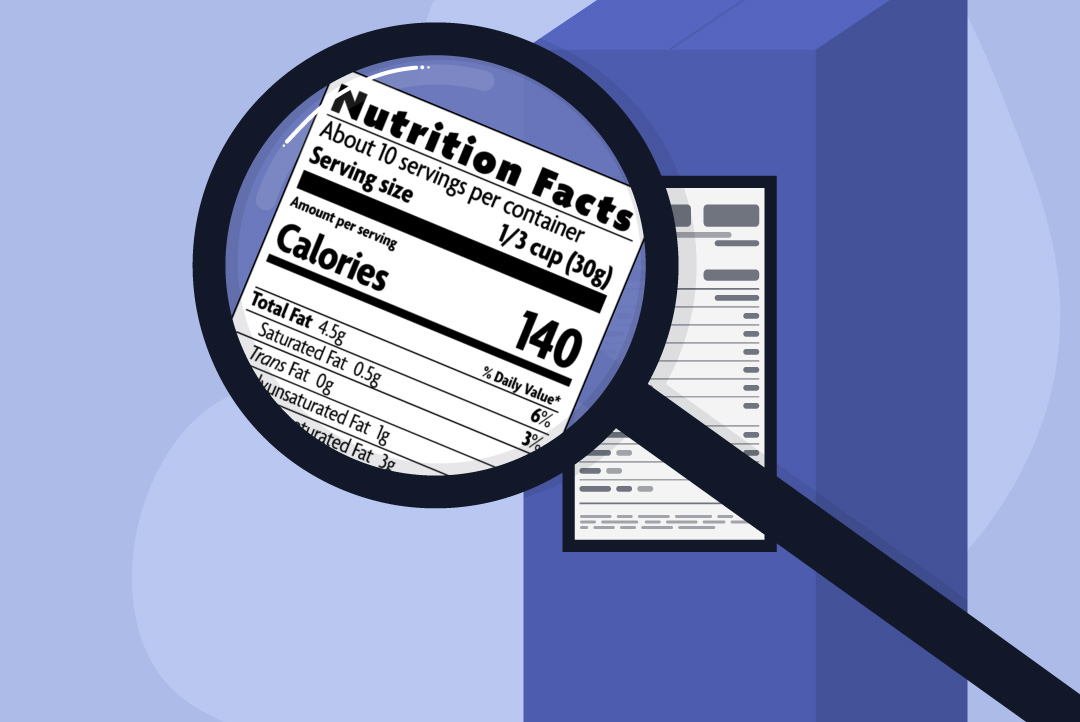
nutrition facts on a package seen through a magnifying glass
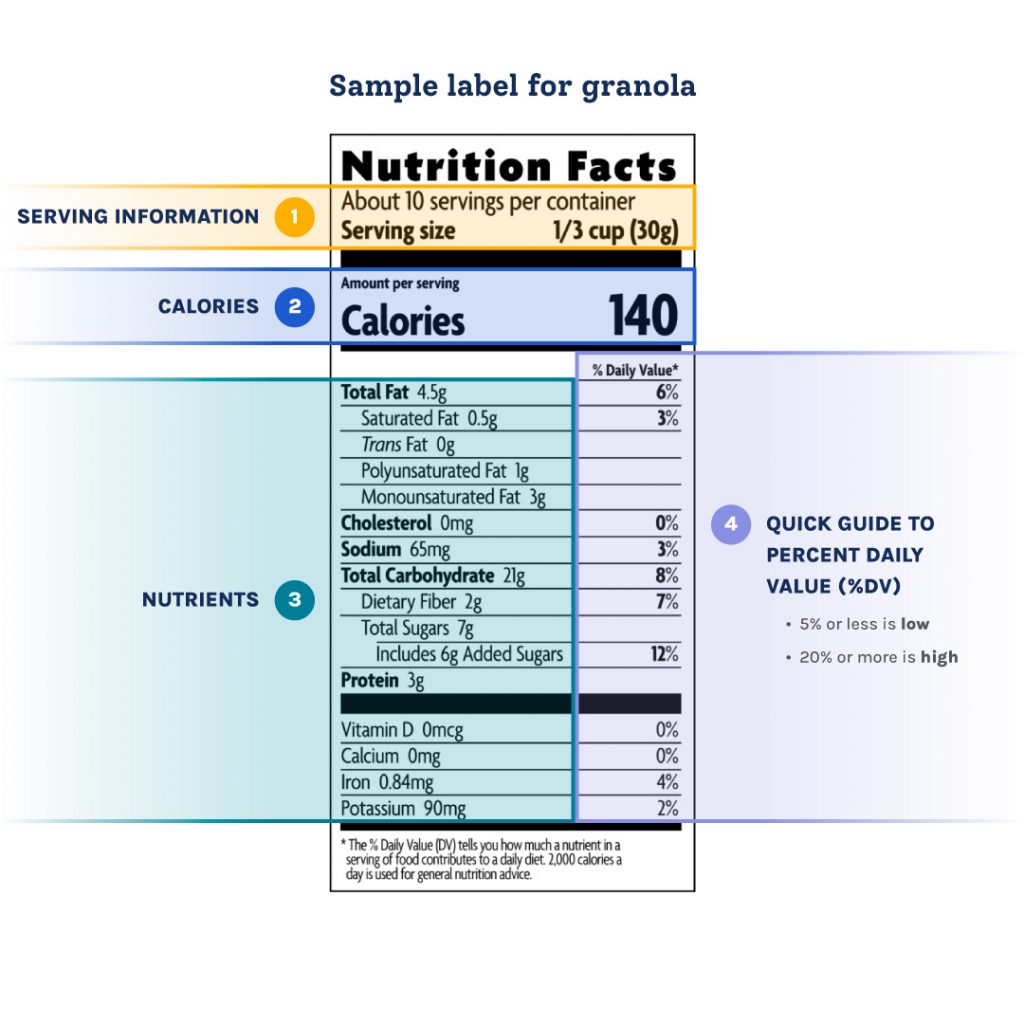
sample label for granola

Serving information

Take a look at the serving size and the number of servings per container. The calories and other nutritional information are based on one serving.

2

Calories

Calories are a measure of how much energy you get from a serving of this food. If you ate the entire package of granola, you’d get 1,400 calories. The average number of calories your body uses is 2,000 per day. (The total varies by age, sex, weight, height and activity level.) Eating too many calories per day is associated with being overweight and obese.

Nutrients

Section three shows key nutrients that can impact your health. As a general guideline, nutrients to get less of include saturated fat, sodium and added sugars (sugars that are added during processing). Nutrients to get more of include dietary fiber, vitamin D, calcium, iron and potassium.

% Daily value

The %DV shows how much a nutrient in a serving of a food contributes to your total daily diet. It can help you determine if a serving of food is high or low in a nutrient. If it contributes less than 5% of your DV it’s low. If it’s more than 20% it’s high.1

Looking for ways to improve your diet and overall health? See the resources below for more information, including Costco benefits that can help.

1 U.S. Food & Drug Administration. How to understand and use the nutrition facts label.